Meet Michael Kloth
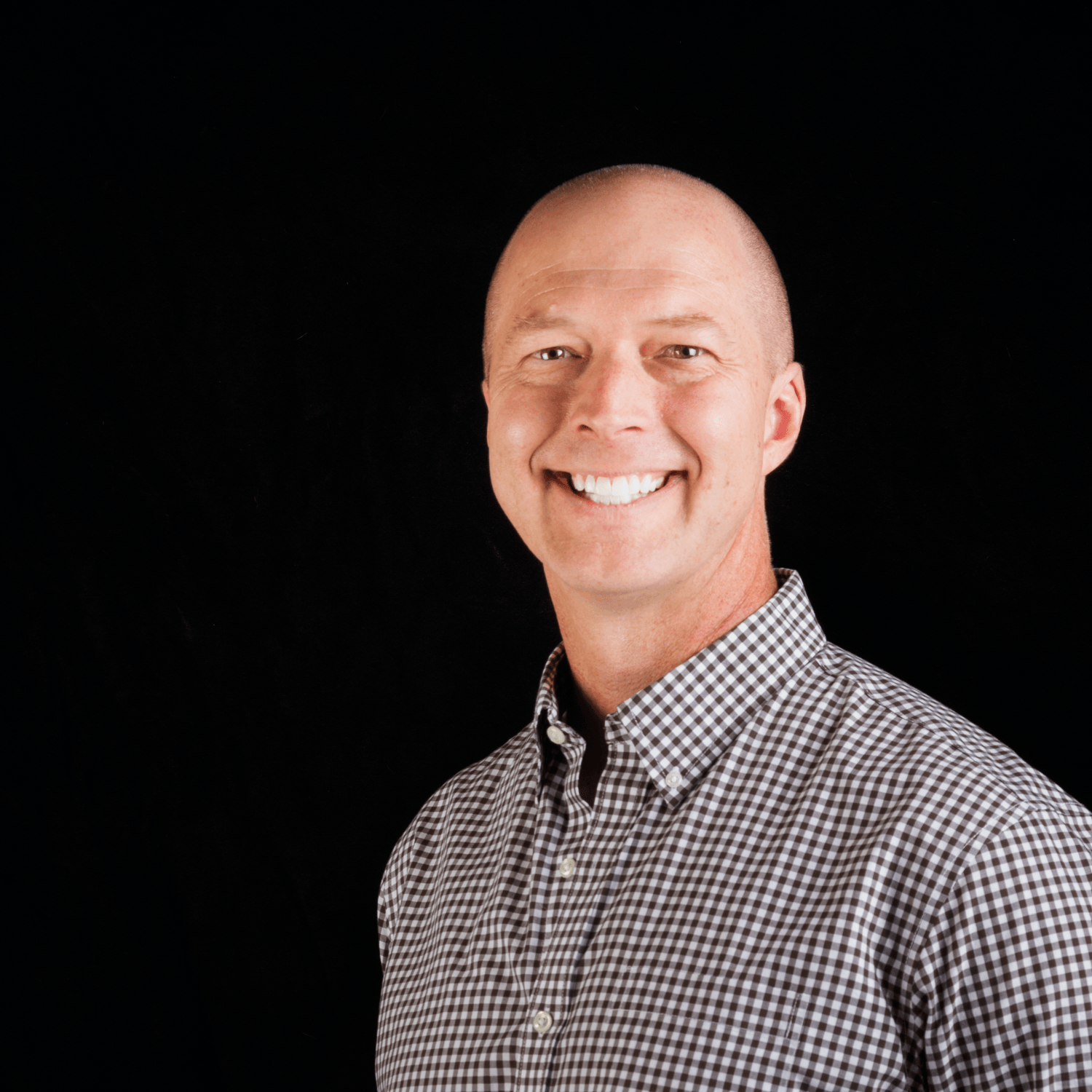


We had the good fortune of connecting with Michael Kloth and we’ve shared our conversation below.
Hi Michael, we’d love to hear more about how you thought about starting your own business?
It started with a dog. In December 2004, our terrier mix Little Bit was diagnosed with lymphoma. She was thirteen pounds. I started a journal in her voice, writing about her treatment, and somewhere in the middle of all that I started photographing her every day. Not for any particular reason. Just because the camera felt like something useful to do when everything else felt uncertain.
That daily practice turned into something I didn’t expect. I started noticing things I’d missed before, the way light moved through a room, the way an animal’s personality surfaced in quiet moments. In 2005, I started volunteering at Woodford Humane Society in Versailles, Kentucky, photographing shelter animals. I wasn’t a professional photographer yet. I was just someone with a camera who kept showing up.
Little Bit went into remission and lived another year and a half. By the time she died in August 2006, I’d already enrolled in an MFA program at Academy of Art University and opened the business. The formal structure came after the work had already been happening for a while.
I don’t think the thought process was ever “I should start a business.” It was more like I’d been photographing animals at the shelter every week, I was writing this journal, I was teaching myself studio lighting, and at some point I looked around and realized I was already doing the work. The business was just the container I built around it.
That was twenty years ago. I’ve moved the business from Lexington to Richland, Washington to Tucson, Arizona. My MFA thesis was on shelter euthanasia. I’ve published two books of shelter animal photography through Merrell Publishers. I’ve been volunteering at Pima Animal Care Center since 2013 and the Humane Society of Southern Arizona since early 2025. The business has grown into professional headshots and fine art pet portraits, but the thread that runs through all of it is that same impulse from 2004, picking up a camera because you’re not sure what else to do, and finding out the work has its own momentum.
Let’s talk shop? Tell us more about your career, what can you share with our community?
I’m an MFA-trained photographer working in Tucson, and I split my time between commercial work (professional headshots and fine art pet portraits) and a personal fine art practice that’s been running alongside the business since the beginning.
The fine art work is where I experiment. My MFA thesis at Academy of Art University was a documentary project on shelter euthanasia called “Even Odds,” which grew into two published books through Merrell Publishers. But my personal projects have gone in very different directions since then. The Kentucky Infrared Series reimagines Bluegrass landscapes in the invisible spectrum, turning familiar pastoral scenes into something alien and dreamlike. Plasticine Prehistoric is a studio project that treats toy dinosaurs as serious photographic subjects, lit and composed with the same care I’d give a commissioned portrait. The humor in that project is entirely in the gap between how seriously the photographs treat the subject and how ridiculous the subject actually is. I also maintain ongoing landscape work in the Sonoran Desert and Pacific Northwest.
I produce my own fine art prints on an Epson 9900 large-format printer using archival pigment inks on museum-quality papers. That’s a deliberate choice. Artist-made prints carry a different weight than outsourced lab work, and the ability to control every step from capture to final print matters to me. My photography is in the TMC Foundation’s permanent Healing Art collection at Tucson Medical Center, which was a meaningful recognition that images can serve a purpose beyond decoration, creating calm in spaces where people are going through difficult things.
The commercial side of the business grew directly out of the fine art foundation. The studio lighting skills, the compositional training, the understanding of how to use light as a storytelling tool rather than just illumination, all of that comes from the MFA. I bring a mobile studio to clients throughout Tucson, Oro Valley, Marana, and the surrounding area, which means I’m adapting to new environments constantly. That keeps the work from becoming formulaic, because every location is a new problem to solve.
What I’d want people to know is that the fine art practice and the commercial work aren’t separate tracks. They feed each other. The patience and observational skills I’ve developed through twenty years of shelter photography make me better at reading people during headshot sessions. The technical precision of commercial deadlines makes my personal work sharper. And the ongoing volunteer work with local rescue organizations keeps me connected to the reason I picked up a camera in the first place, which was to make images that matter to someone beyond just me.
The biggest lesson from twenty years of running a creative business as a sole proprietor is that consistency outlasts talent. I’ve moved this business across three states, rebuilt the client base each time, and kept the fine art practice going through all of it. The work that accumulates over years, the quiet, unremarkable sessions and the slow improvement, is worth more than any single project or recognition.
Any places to eat or things to do that you can share with our readers? If they have a friend visiting town, what are some spots they could take them to?
If someone’s visiting for a week, I’d start with the Arizona-Sonora Desert Museum. It’s not a traditional museum or a traditional zoo, it’s something in between, and it’s the best introduction to the Sonoran Desert I know of. Go early in the morning before it gets hot. Saguaro National Park is the obvious companion to that, either the east or west district, and Sabino Canyon is worth a full morning for the hiking alone.
For a different kind of Tucson experience, Tohono Chul is beautiful, part botanical garden, part art gallery, and quieter than the Desert Museum. Reid Park Zoo is smaller than people expect but well done, especially if kids are involved. And the Sonoran Glass School is one of those places most locals don’t even know about. Watching glassblowing in the desert heat feels like it shouldn’t work, but it does.
For food, Ghini’s is my go-to French bistro breakfast, and Baja Cafe does some of the best brunch in town. Calle Tepa is excellent, authentic Mexican food without any pretense. Midtown Vegan Deli is worth a stop even if you’re not vegan. And Tucson has a surprisingly strong pizza scene. Rocco’s Little Chicago, Fiamme, and 313 Detroit Style Pizza are all favorites.
For something uniquely Tucson, I’d take them to the Gaslight Theatre. It’s campy, it’s interactive, the audience boos the villain, and nobody leaves without laughing. The food is great too, I always get the pizza. It’s the kind of place that only works in a city that doesn’t take itself too seriously.
If they’re around on a Monday evening, Meet Me Mondays is a free social walk and run through Beyond Tucson. It’s currently at Corbett’s through April 2026, then moves to MSA Annex/Westbound for the summer. Check-in is at 5, guided walks leave at 5:15 and 5:30. Good way to see Tucson’s creative community in a casual setting.
Who else deserves some credit and recognition?
The shelter staff and volunteers at every organization I’ve worked with over the past twenty years. Woodford Humane Society in Kentucky, Benton-Franklin Humane Society and Tri-Cities Animal Shelter in Washington, and here in Tucson, the teams at Pima Animal Care Center and the Humane Society of Southern Arizona.
When I started at PACC in September 2013, the shelter was in the middle of a transformation. In 2010, PACC euthanized more than 14,000 animals. By 2019, that number was under 1,000, with a live release rate above 91%. That didn’t happen because of photography. It happened because of sustained, exhausting, largely invisible work by shelter staff, veterinary teams, foster networks, behavior specialists, and volunteers who showed up on days when showing up was the hardest thing to do.
I’ve been the person with the camera for a lot of that. I’ve watched foster coordinators move mountains with spreadsheets and cell phones. I’ve watched Dr. Karyn Carlson at HSSA treat seven Navajo Nation rescue puppies with severe scabies and malnutrition, get every single one healthy, and place all of them in permanent homes in Tucson.
Photography can help tell those stories. It can help animals get adopted faster. It can support grant applications and fundraising campaigns. But the people doing the daily work are the ones who deserve the recognition. My camera just makes their effort more visible.
I’d also mention HeARTs Speak, I was one of the first members after my first book was published. That network connects photographers with shelters across the country and internationally. The idea that better photography leads to faster adoptions has become standard practice in animal welfare now, and that’s because of the photographers and shelter teams who embraced it together.
Website: https://michaelklothphotography.com/
Instagram: https://www.instagram.com/tucsonpetphotography
Linkedin: https://www.linkedin.com/in/michaelkloth/
Facebook: https://www.facebook.com/MichaelKlothPhotography
Yelp: https://www.yelp.com/biz/michael-kloth-photography-tucson?osq=Michael+Kloth+Photographyy
Youtube: https://www.youtube.com/michaelkloth
Other: https://artofphotographyai.substack.com
Image Credits
Michael Kloth Photography


